How long does it take to spray a garage door?
How Long Does It Take to Spray a Garage Door?
Spray painting a garage door ranks as one of the fastest ways to refresh its appearance. Timeframes remain predictable when handled correctly. Several stages shape the schedule, from preparation to curing. Each stage matters. Skipping steps shortens nothing and risks poor results.
Average Timeframe for Garage Door Spraying
Most standard garage doors take one full day from start to finish. This includes preparation, masking, spraying, and initial drying. Larger or heavily worn doors extend into a second day.
Single up-and-over doors are often completed within four to six hours of active work. Sectional or double doors require more time due to extra panels and edges. Drying continues beyond this window, though doors often return to light use within hours.
Preparation Time Sets the Pace
Preparation consumes the largest share of time. It shapes the final finish.
The process begins with cleaning. Dirt, grease, and traffic film must go. This stage alone can take thirty to sixty minutes, depending on the condition.
Next comes sanding. Old paint needs keying. Flaking areas require removal. Rust spots demand treatment. Expect one to two hours here.
Repairs follow. Small dents get filled. Cracks sealed. Once dry, sanding resumes. This stage varies widely. Minor repairs add little time. Heavily damaged doors slow progress.
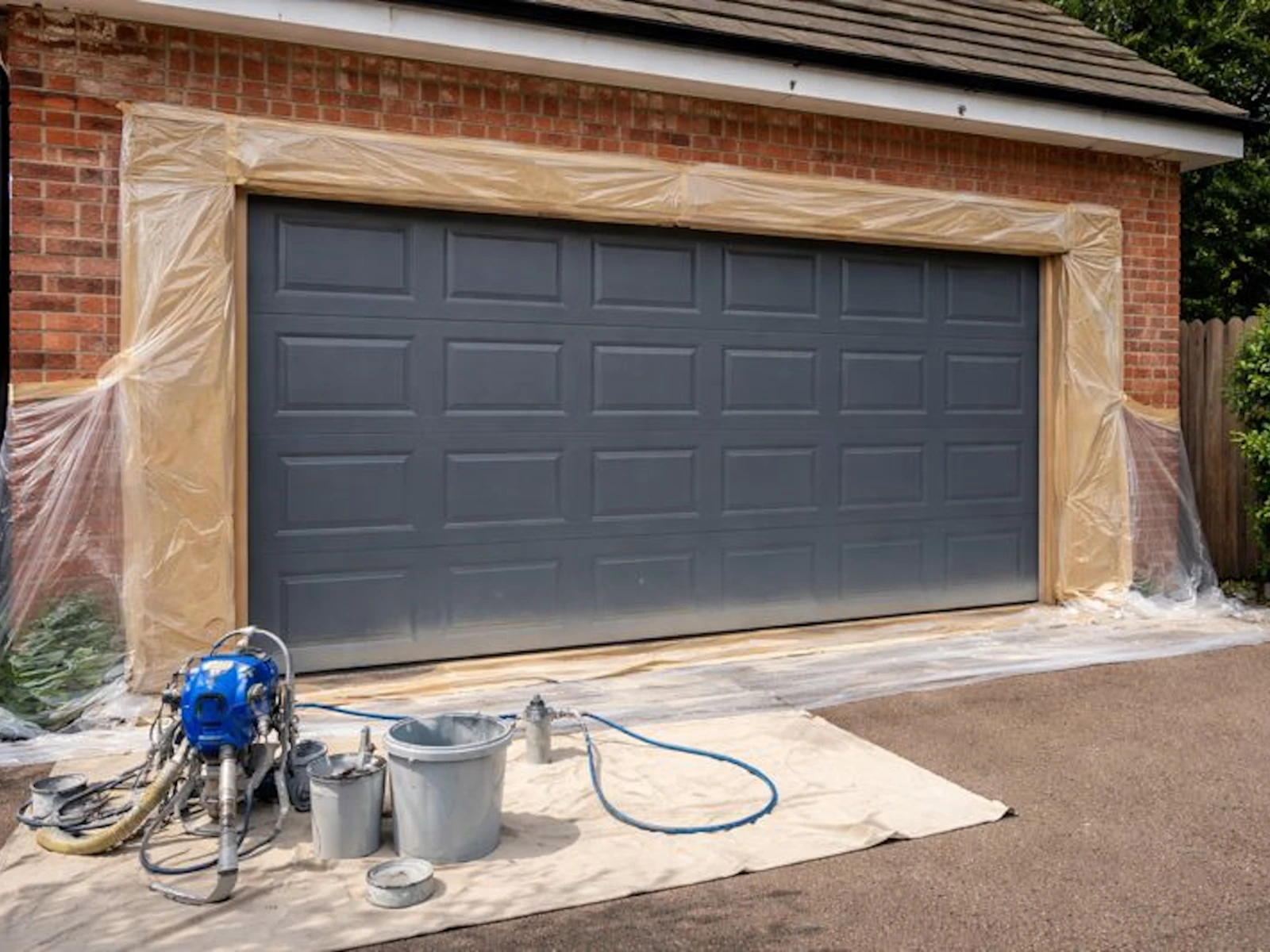
Masking completes preparation. Frames, walls, and surrounding surfaces require protection. This step usually takes thirty minutes.
Spraying Time for Different Door Types
Spraying itself moves quickly.
A single metal or timber door usually takes twenty to thirty minutes per coat. Most jobs require two coats. Some colours need three.
Sectional doors take longer. Each panel needs even coverage. Edges require care. Spraying time often reaches one hour per coat.
Drying time sits between coats. Modern coatings flash off fast. Recoating begins after 30-60 minutes, depending on temperature and airflow.
Drying and Curing Time
Drying does not equal curing. Doors dry to the touch within one to two hours. Light use may resume after this stage.
Full curing takes longer. Expect twenty-four to forty-eight hours before heavy use. Avoid pressure washing or harsh cleaning during this period.
Weather affects drying. Warm, dry conditions speed progress. Cold or damp air slows it. Professional sprayers plan around this.
On-Site Versus Off-Site Spraying
Some garage doors stay in place. Others come off for off-site spraying.
On-site spraying saves time. No transport needed. Masking protects the surroundings. This option suits most homes.
Off-site spraying increases total time. Removal, transport, and refitting add hours or days. It suits doors needing major repair or colour changes with specialist coatings.
Most residential jobs finish faster on-site.
Factors That Extend the Schedule
Several elements add time.
Rust treatment slows work. Each treated area needs drying before painting. Deep corrosion may require primers.
Complex designs also take longer. Raised panels, grooves, and decorative trims demand precision. Flat doors spray faster.
Colour choice matters. Dark colours over light bases often need extra coats. High-gloss finishes require careful application and a longer drying period.
Access affects speed. Tight driveways or shared access areas slow setup and masking.
Professional Spraying Versus DIY Timeframes
Professionals complete jobs faster. They use proper equipment. They manage airflow and temperature. They apply even coats without delay.
DIY projects often stretch across days. Limited tools slow progress. Uneven coats require correction. Drying times extend due to poor conditions.
Professional spraying saves time and reduces risk.
Aftercare and Return to Use
Most sprayed garage doors reopen the same day. Avoid contact during early drying. Keep pets and children clear.
Full use resumes within two days. The finish hardens fully within a week. After this, the surface resists weather and wear.
Conclusion
Spraying a garage door usually takes one day, with full curing shortly after. Preparation dictates timing. Door type influences duration. Weather plays a role.
Handled correctly, the process delivers fast transformation with minimal disruption. The result looks clean, smooth, and long-lasting.