Can Radiators Be Sprayed?
Yes, radiators take spray paint well, and in most cases it produces a far smoother finish than a brush ever could. The ridges, grooves and awkward angles on a typical radiator make brushwork fiddly, and spray paint reaches into those gaps without leaving visible strokes. The real question is whether you prepare the radiator properly and pick a product built for the heat it puts out.
Why Spray Paint Beats a Brush for This Job
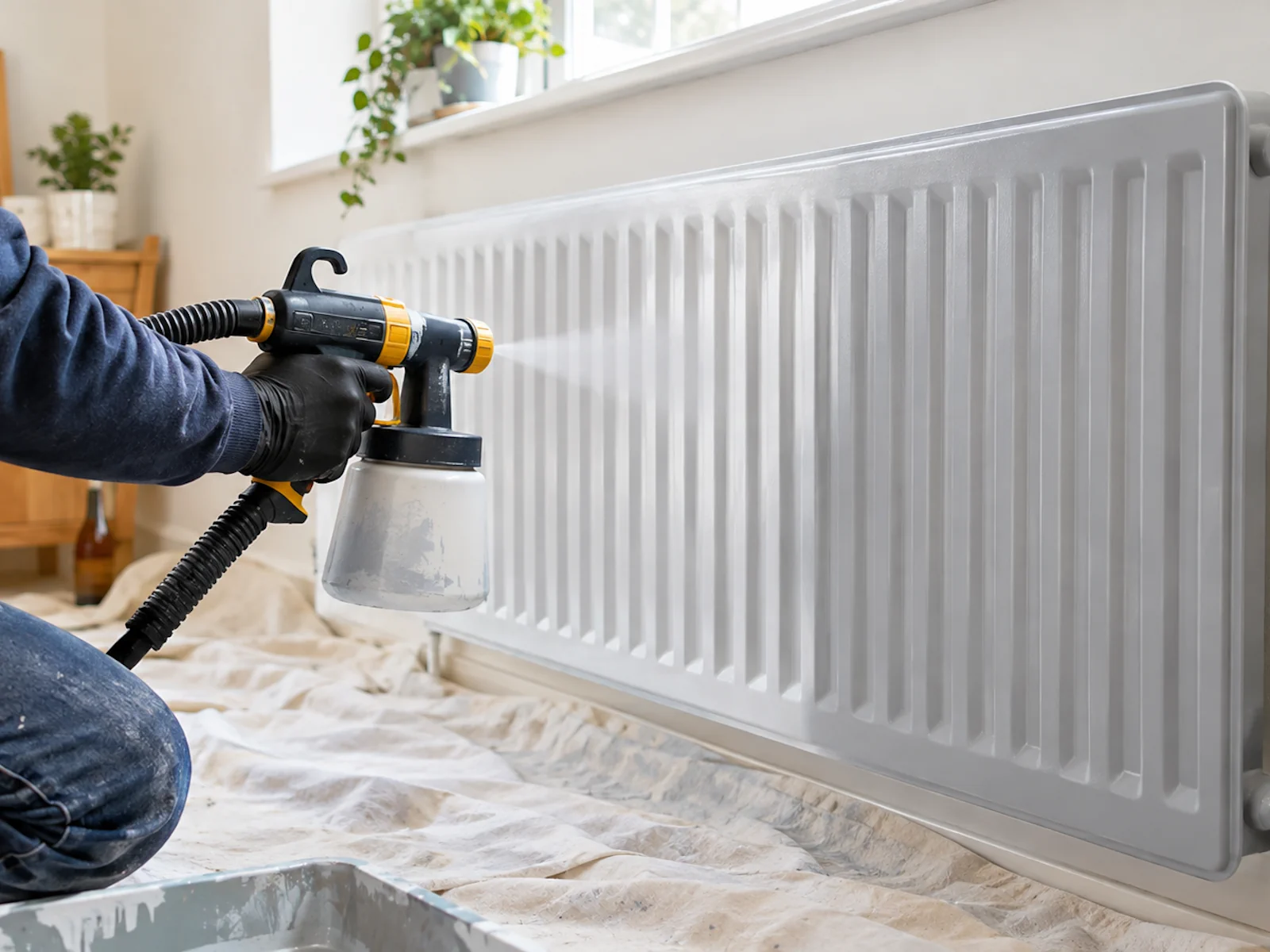
Radiators aren’t flat. Columns, fins and decorative grilles trap brush marks and drips in a way that spray paint avoids. A can or spray gun coats every edge evenly, including the narrow gaps between panels that a brush can’t reach. The finish dries with a factory-smooth look, not the slightly textured surface a roller or brush leaves behind.
Spraying also saves time on multi-column radiators. Painting between columns by hand takes patience and a steady wrist. A light, even pass with a spray can covers the same area in a fraction of the time, and the result looks far more professional once it’s dry.
Choosing the Right Paint for Radiators
Not every spray paint is best for a radiator. Heat-resistant paint is essential, since ordinary spray paint yellows, cracks or gives off a strong smell once the heating clicks on. Look for a product rated to at least 80°C, which covers most domestic radiators running on standard central heating.
Enamel-based radiator paints tend to hold their colour best and resist the yellowing that affects cheaper white spray paints over time. Matt and satin finishes hide surface imperfections better than gloss, which highlights every dent and old drip mark. If the radiator already carries years of old paint, a satin finish gives a more forgiving result.
Preparing a Radiator Before You Spray
Preparation is more important than the spraying itself. Start by turning the heating off and letting the radiator cool completely. A warm radiator affects how paint sets and can leave an uneven, tacky finish.
Wipe the surface down to remove dust, grease and any residue from cleaning products. Sand lightly with fine-grit paper to knock back the gloss on old paintwork, since spray paint struggles to grip a slick surface. Wipe away the dust with a slightly damp cloth afterwards, then let the radiator dry fully before moving on. Treat any rust spots with a rust-inhibiting primer first, otherwise they’ll bleed through the new paint within weeks.
Should You Remove the Radiator First?
Taking the radiator off the wall gives the best result. It lets you reach the back and every column without the wall or pipework getting in the way, and it protects the wall behind it from overspray. That said, removing a radiator means draining it first, which adds time and a bit of mess.
Most people leave the radiator on the wall and mask off the surrounding area instead. Thick masking paper or old sheets taped behind and beneath the radiator catch overspray effectively. Sliding a sheet of cardboard behind the radiator and moving it while you work protects the wall.
Step-by-Step: How to Spray Paint a Radiator
- Turn off and cool the radiator before starting.
- Clean and sand the surface, then wipe away all dust.
- Mask the surrounding wall, floor and pipework with paper or sheeting.
- Shake the can thoroughly for at least a minute before use.
- Spray in light, even coats from around 20 to 30cm away, keeping the can moving to avoid drips.
- Wait between coats. Most radiator paints need 10 to 15 minutes between light coats and around 24 hours before handling.
- Apply two to three thin coats rather than one heavy layer. It runs and pools in the grooves.
How Long Does It Take to Dry and Cure?
Touch-dry usually happens within an hour, but curing takes far longer. Most heat-resistant paints need at least 24 to 48 hours before you switch the heating back on. Curing too soon bakes in a chemical smell and can leave the surface tacky for weeks. Some paints specify a longer cure of up to a week for full hardness, so check the tin rather than guessing.
Common Mistakes That Ruin a Radiator Paint Job
Rushing the heating back on is at the top of the list. Painters also skip sanding. This leaves new paint peeling off old gloss within months. Spraying too close to the surface causes runs that pool in the grooves and never fully level out. Using a standard spray paint instead of a heat-rated one is another error, and it usually shows up as yellowing or bubbling the first time the heating runs at full strength.
Is It Safe to Turn the Heating Back On Afterwards?
Once the paint has fully cured, not just dried to the touch. Switching the heating on too early releases fumes and can leave a lasting smell in the room for days. Once cured, a properly painted radiator copes with normal central heating temperatures without trouble, and the finish holds up for years.
Final Verdict
You can absolutely spray radiators, and the results usually beat brush painting by a wide margin. The finish depends on preparation, patience and picking a genuine heat-resistant product rather than whatever’s cheapest on the shelf. Get those three things right, and a tired old radiator can look brand new in an afternoon.