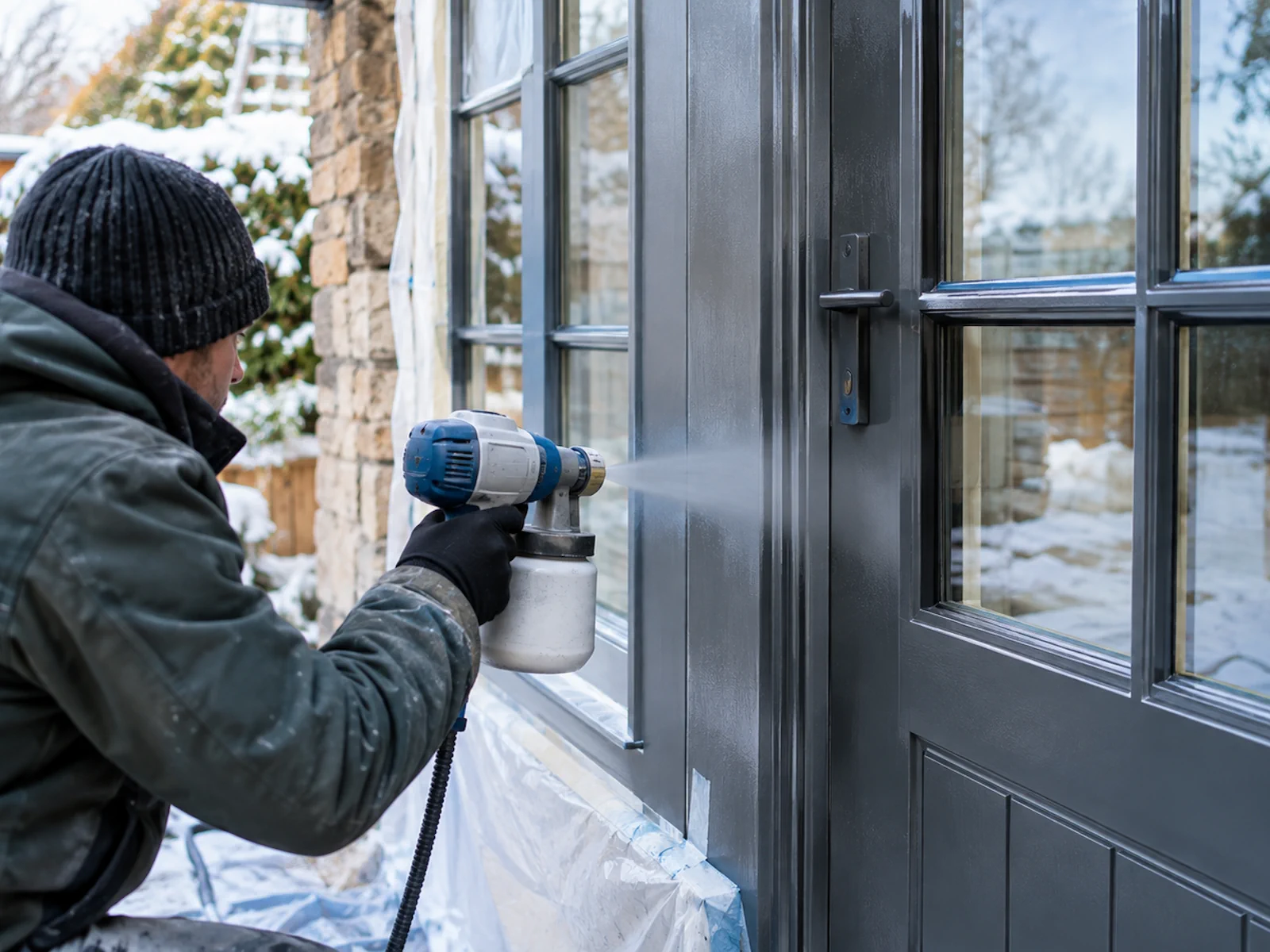
Can You Spray Paint Doors and Windows in Cold Weather?
Cold snaps make painters nervous, and for good reason. Spray paint behaves differently when temperatures drop, and doors and windows sit right on the front line of that problem. The short answer is yes, you can spray paint them in cold weather, but only within certain limits, and only once you understand what cold actually does to paint as it dries.
Why Cold Weather Causes Problems for Spray Paint
Paint needs warmth to cure properly. Below a certain point, the solvents inside it stop evaporating at the right speed. Instead of drying evenly, the surface can skin over while the paint underneath stays wet and soft. That mismatch causes wrinkling, poor adhesion, and a finish that looks patchy under direct light.
Surface temperature matters more than air temperature here. Metal door frames and glass-adjacent surfaces cool faster than the air around. Paint applied to a surface colder than the surrounding air often traps moisture underneath the film. That trapped moisture causes bubbling, or a cloudy finish that only shows up days later.
What Temperature Is Too Cold for Spray Paint?
Most standard spray paints, including enamel and acrylic types, carry a manufacturer’s minimum application temperature of around 10°C (50°F). Some cold-weather formulas push that down to 4°C (39°F), but few products perform reliably below freezing.
It isn’t just the room thermometer that matters. A door left outside overnight can sit several degrees colder than the surrounding air, even on a mild morning. Touch the surface before you start. If it feels cold to the hand, it’s too cold for paint, regardless of what the forecast says.
How Cold Affects Doors and Windows Specifically
Doors and windows add extra variables. Wood expands and contracts with temperature, and painting a door mid-contraction can leave a finish that cracks once the wood warms back up and swells again. UPVC and aluminium frames behave differently too. Both materials turn more brittle in the cold, and paint applied to a rigid, chilled surface won’t flex the way it needs to as temperatures shift through the day.
Glass presents its own issue. Overspray near a cold window pane sets unevenly along the edges, leaving a rough line that’s hard to clean up later. Draught seals and rubber gaskets stiffen in low temperatures. It’s easy to catch and tear them during masking or prep work if you’re not careful.
Can You Still Get a Decent Finish?
Yes, with the right approach. Painters carry out successful work through autumn and winter, but they adjust their methods rather than fighting the conditions. The goal is to control the environment around the surface, not just wait for a lucky warm afternoon.
Practical Tips for Spray Painting in Cold Conditions
A few adjustments make a real difference:
- Bring the item indoors wherever possible. You can often remove a door from its hinges and paint it in a garage or workshop, where you can control the temperature more easily.
- Warm the surface, not just the air. A space heater pointed at the door or frame for twenty minutes before spraying brings the material closer to room temperature.
- Choose a cold-weather formula. Some paints use modified solvents that cure at lower temperatures without skinning over.
- Apply thin coats. Thick layers trap solvent and take far longer to cure in cold air. Two or three light passes beat one heavy one.
- Extend drying time between coats. What takes thirty minutes in summer might need two hours in winter. Rushing the next coat is one of the most common causes of a ruined finish.
- Check the humidity, not just the temperature. Damp cold air slows curing further and raises the risk of condensation under the paint film.
Best Paint Types for Cold Weather
Oil-based paints generally handle low temperatures better than water-based ones, since they don’t rely on evaporation in the same way. Acrylic and latex paints struggle more, because water evaporates slowly in cold air and can freeze before the paint forms a proper film. If a project has to go ahead in genuinely cold conditions, an oil-based spray built for exterior use gives you a better chance of a clean result.
Setting Up a Makeshift Warm Spraying Area
Not every household has a heated garage. A simple fix is to build a temporary enclosure from plastic sheeting with a portable heater. Place it at a safe distance from spray fumes. This traps warm air around whatever you’re painting, without heating the whole room. Good ventilation still matters, so leave a gap for airflow even inside the enclosure.
Common Mistakes to Avoid
Painters often check the weather app and stop there. That’s not enough. Surface temperature, not the forecast, decides whether the job goes well. Others rush the process because daylight runs short in winter, applying a second coat before the first has properly set. Skipping a light sand between coats is another frequent error. Cold-cured paint can stay slightly soft for longer, and skipping this step locks in a rougher texture.
Should You Wait for Warmer Weather?
If the job isn’t urgent, waiting for a stretch of milder days above 10°C makes life considerably easier. But cold weather doesn’t have to stop a painting project altogether. With a warmed surface, thin coats, patience between layers, and the right paint formula, doors and windows can still take on a smooth, lasting finish even in the depths of winter.